|
State-of-the-Art
Algorithmic Optimization Models - Review
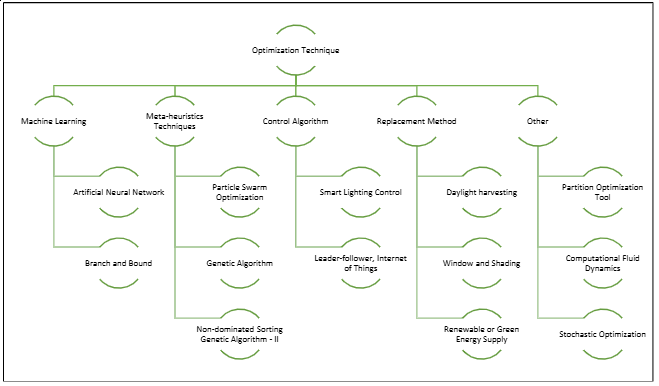
Meta-Heuristic
Optimization Frameworks: A 2025 comprehensive systematic
review published in ResearchGate maps the evolution of
lighting system optimization over two decades. The study
tracks how researchers use evolutionary
computation—specifically Particle Swarm Optimization (PSO),
Multi-Objective Particle Swarm Optimization (MOPSO), and
Genetic Algorithms (GA)—to configure optimal luminaire
configurations. By connecting these algorithms with
simulation engines like DIALux and MATLAB, studies achieve
energy savings of up to 70% without dropping below baseline
occupant performance thresholds.LEARN
MORE
|
|
Public
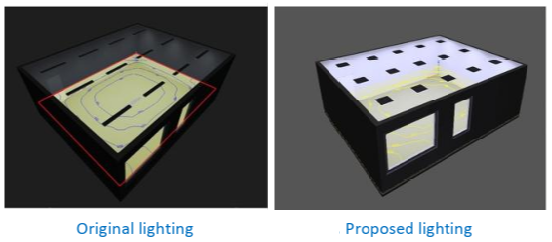
Building Retrofit Optimization
Studies
tracking public infrastructure optimization focus deeply
on adaptive shading and the integration of LED spectral
distributions. According to a November 2025 study in MM
Science Journal, retrofitting legacy structures with
multi-variable optimized artificial and natural light
balances consistently yields a minimum 30% reduction in
power consumption. LEARN
MORE
|
|
Lighting
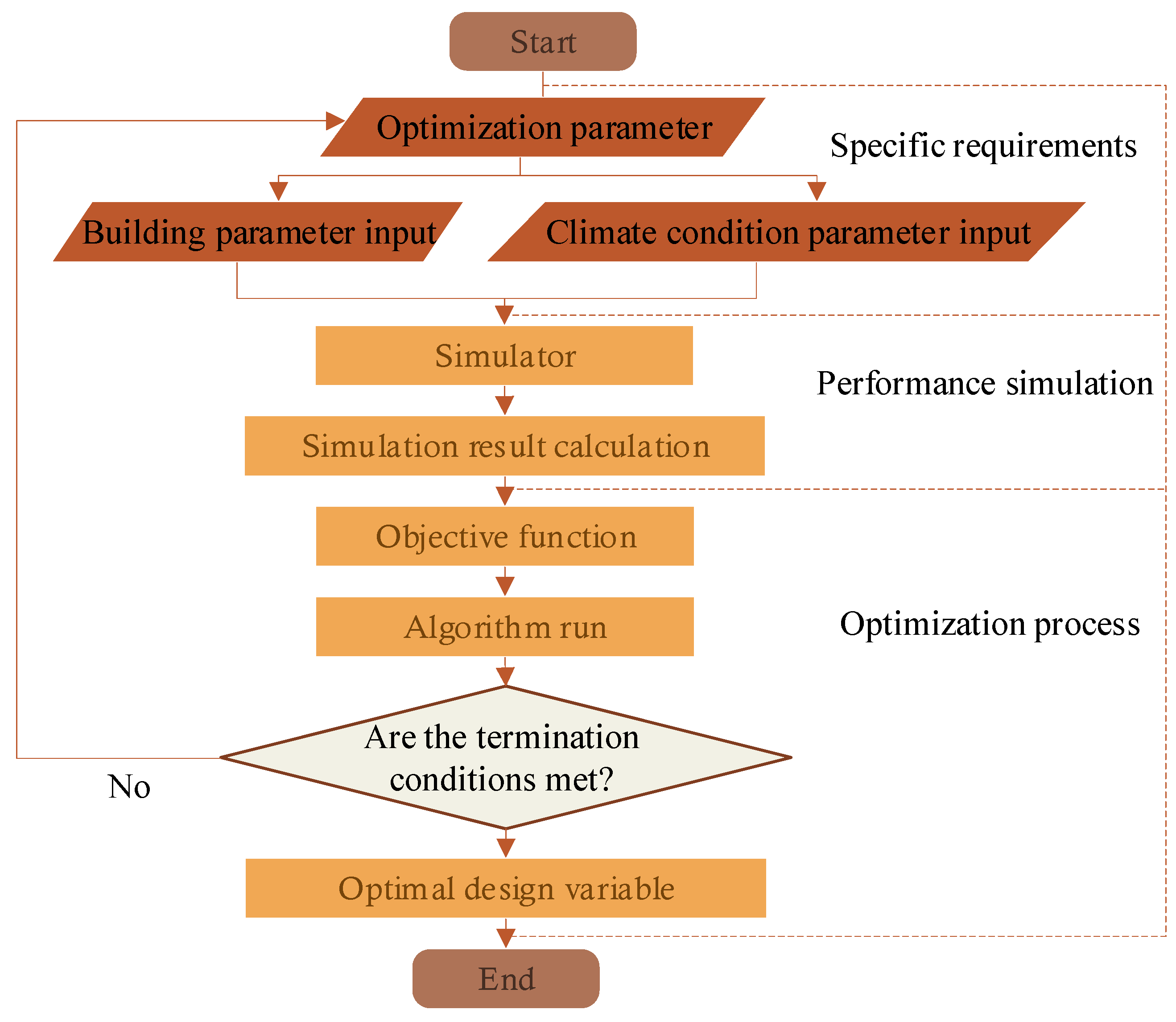
Parameters Optimization Including Visual Comfort in A Library
Published
in MDPI (2025), a highly granular study introduced a
multi-objective optimization framework specifically for
university reading environments. It evaluates four critical
visual comfort parameters: desktop illuminance, correlated
color temperature (CCT), background reflectance, and screen
luminance. Driven by the Non-dominated Sorting Genetic
Algorithm-II (NSGA-II), the system selects optimal
structural parameters. The real-world results showed a
massive elevation in lighting uniformity (scaling from a
poor 0.1 up to a highly uniform 0.6–0.75), a controlled
glare rating (UGR < 22), a 25% boost in natural daylight
area coverage, and a 20% drop in active energy consumption.
LEARN
MORE
|